

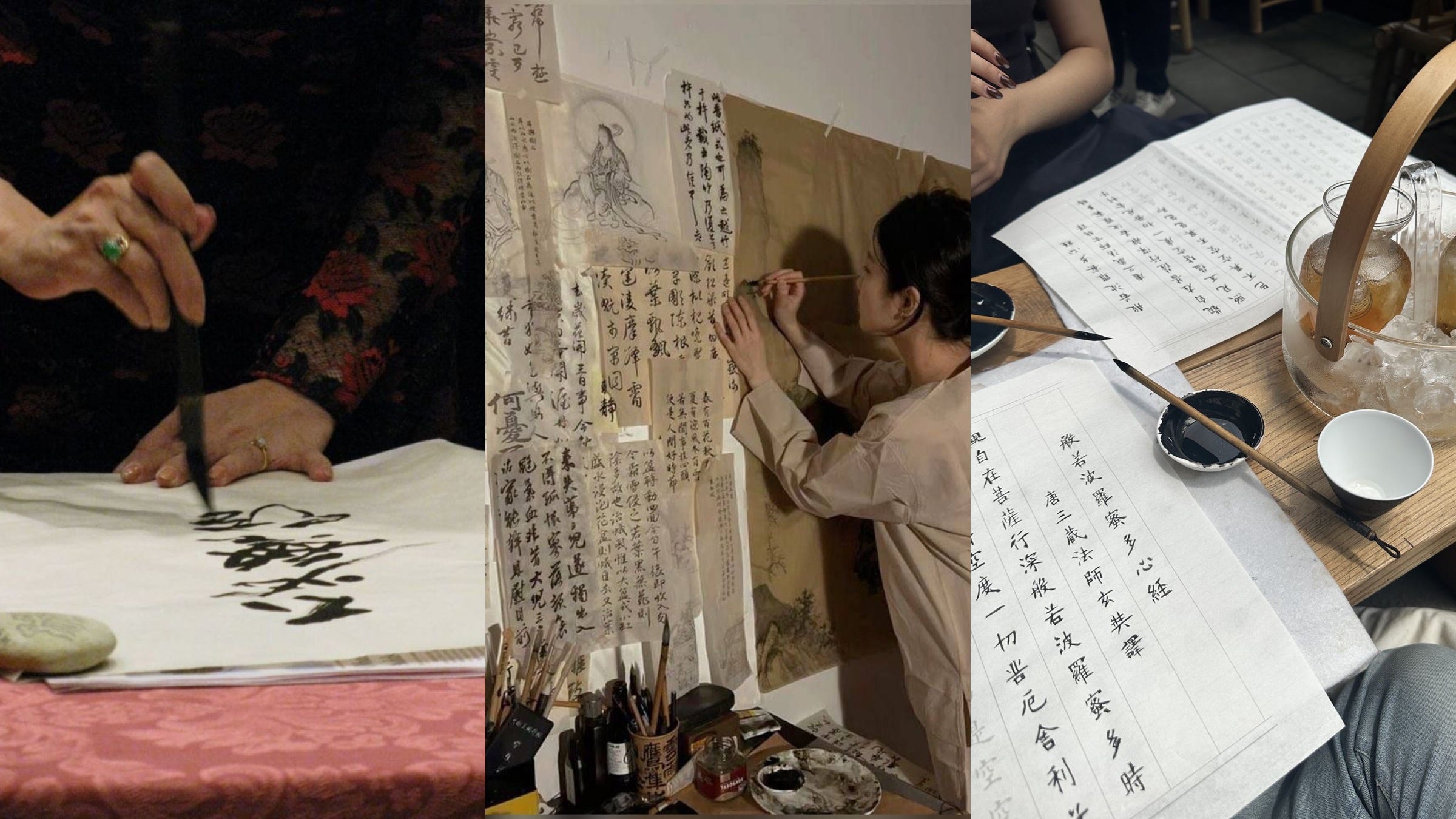
6 years ago, I was afraid to speak Chinese in public.
That was 2020. COVID. When being visibly Chinese meant being a target for overt racism or microaggressions, especially in the USA.
Today, my feed is full of people declaring they’re “in a Chinese time in their life.” Slippers indoors. Warm water instead of ice. Eating dim sum at home. Tang (or incorrectly called ‘mandarin’) jackets. Tasseled belts and necklaces. Moodboards featuring the ‘Year of the Horse’ aesthetic.
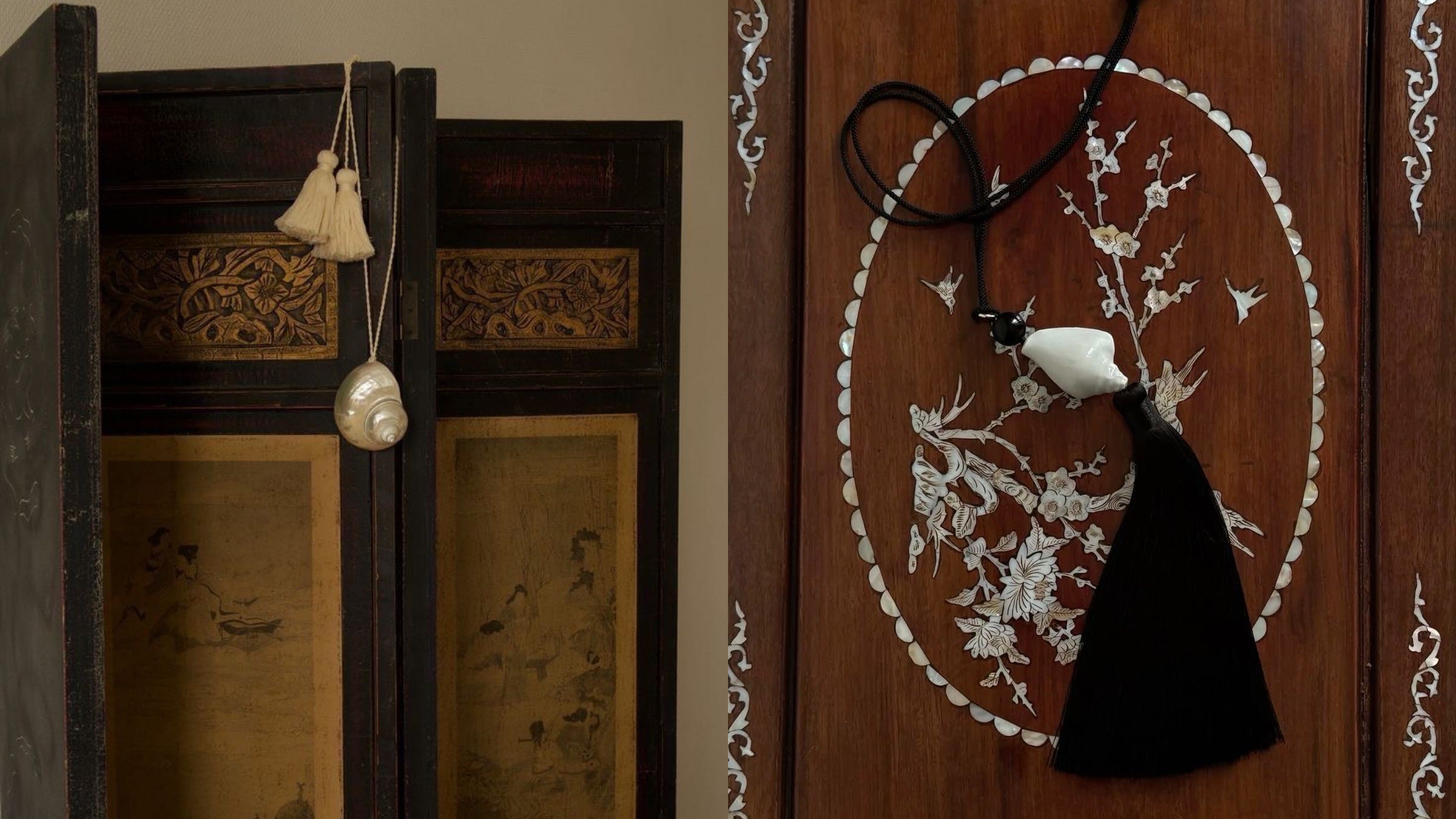
And I feel... complicated.
Because one part of me is genuinely happy. Finally, Chinese culture is being seen as beautiful instead of foreign. Finally, cultural aesthetics that shaped my entire childhood are being celebrated instead of mocked.
But the other part of me — the part that grew up translating between two worlds, the part that’s spent 26 years feeling too Chinese for Australia and too Australian for China —that part needs to say something.
I’m not angry that Chinese culture is trending. I’m not gatekeeping who gets to drink warm water or wear a qipao.
But I’m watching Chinese culture be reduced to consumable aesthetics. Brands that — up until this point — have not recognised or appreciated their Chinese customers suddenly releasing limited edition ‘Lunar New Year’ capsules designed in collaboration with artists who… are not even Chinese.
And if being Chinese becomes just another trend to try on and discard — if “appreciation” stops at slippers and soup dumplings — then we haven’t really moved beyond exoticization. We’ve just made it prettier.
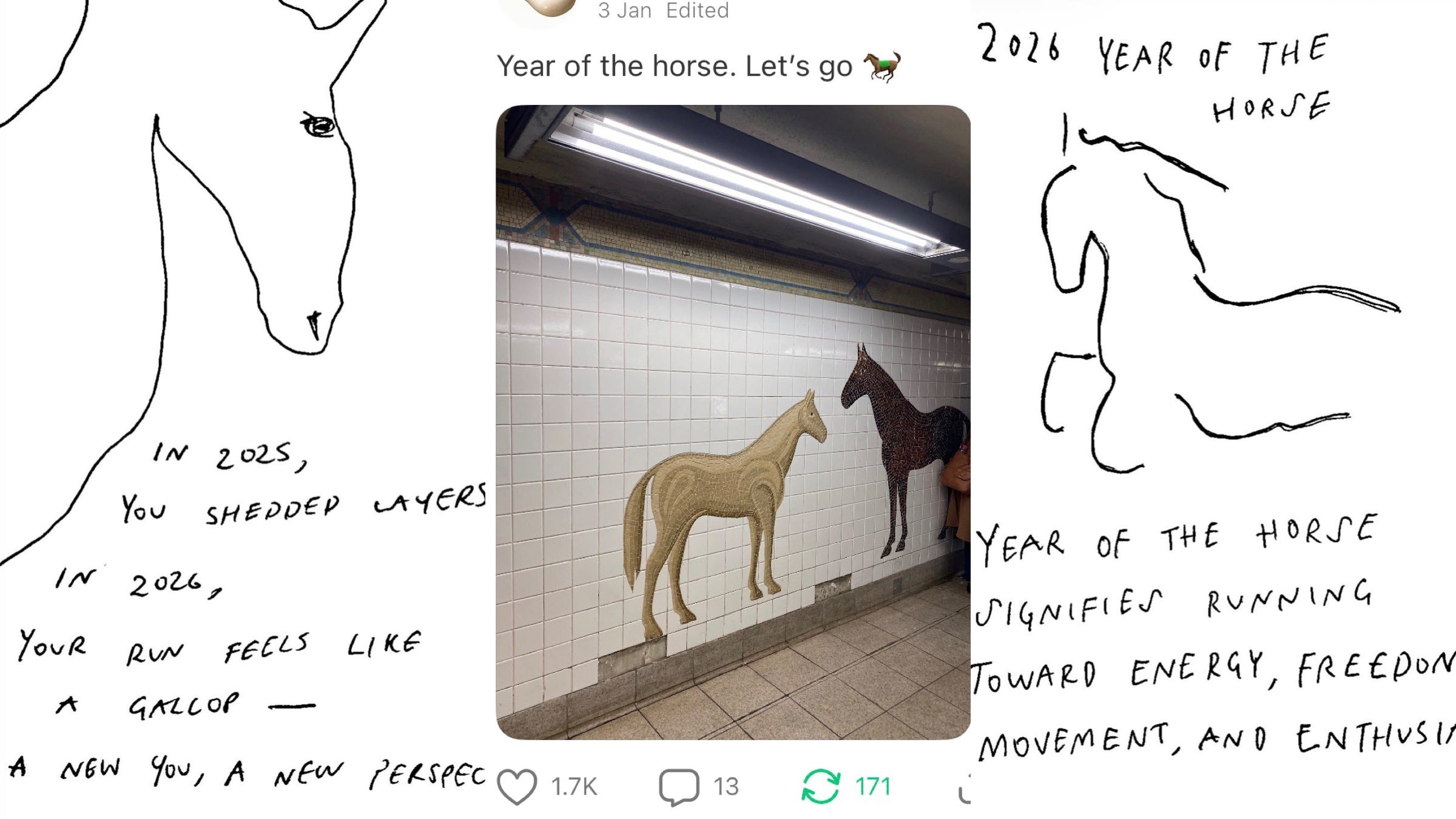
Because here’s what I need you to understand: being Chinese isn’t what you wear or eat or how you decorate your home.
It’s what you carry. It’s what you sacrifice. It’s what shapes every major decision you make, often invisibly, for your entire life.
Appreciation is the first step, not the destination.
And if you’re going to borrow the language of my culture — if you’re going to claim you’re in “a Chinese time in your life” — I want you to understand what you’re actually claiming.
Let me show you what that actually means.
The In-Between
I need to tell you where I’m speaking from, because it matters.
I was born in Australia.
I was raised by my Chinese grandmother and a Chinese nanny, whilst my Chinese parents were at work every day. I spoke Mandarin and Cantonese before I spoke English (which landed me in the English Second Language class in primary school). I ate rice, steamed pork chops and chicken feet for lunch instead of ham and cheese sandwiches.
My childhood home smelled like soy sauce and chive dumplings. We ate rice with every meal. We took our shoes off at the door. We drank warm water because cold water was bad for digestion. We never wasted food. We saved jars and takeaway boxes for future use. We respected our elders without question.
This wasn’t aesthetic. This was baseline. This was just … life.
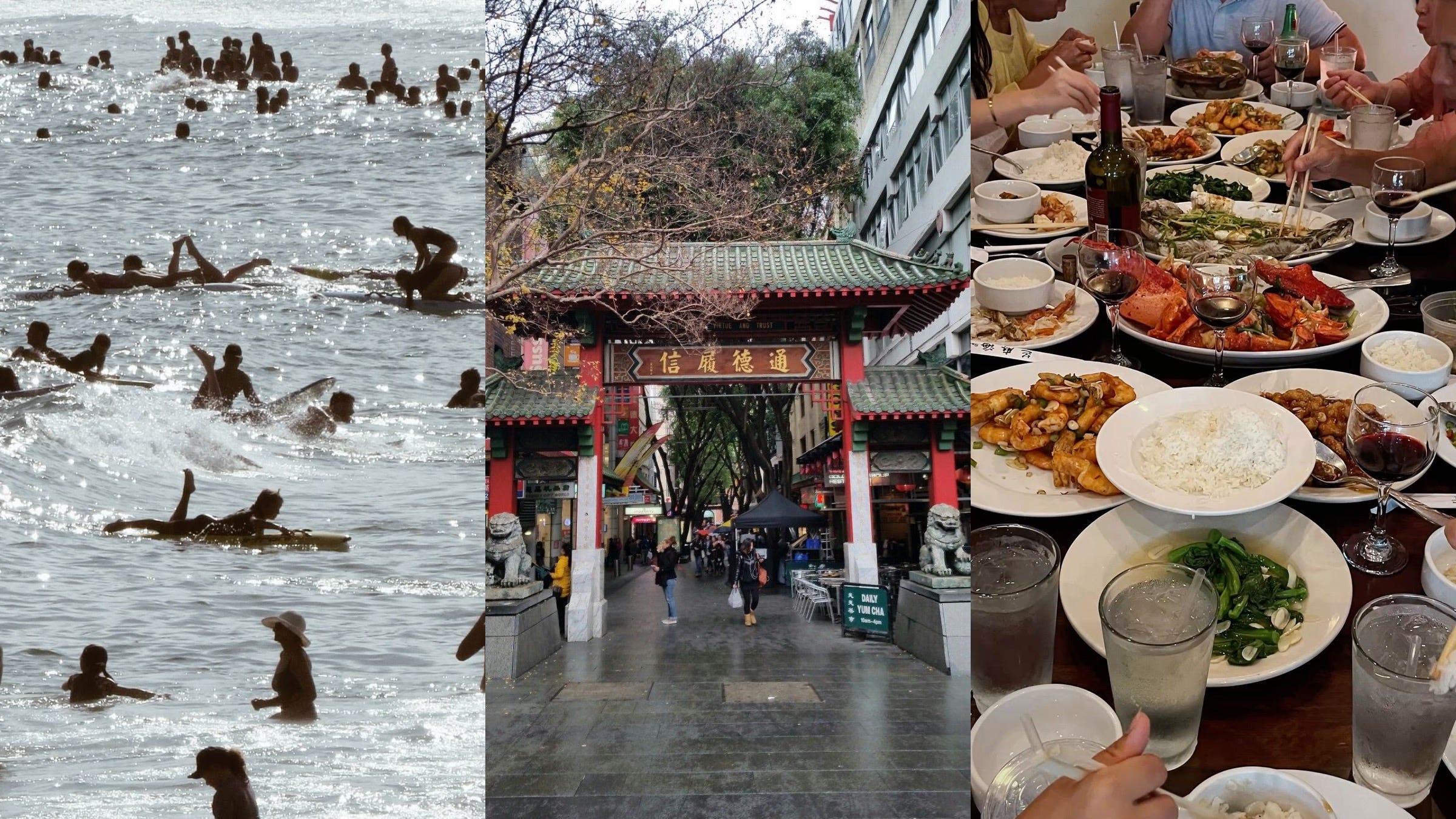
But outside my home, I lived in a Western world.
I was one out of one-and-a-half Asians in my Kindergarten cohort (my childhood best friend was half-Chinese). My family was one of few Chinese families in a predominantly white neighbourhood. The values I absorbed from television, from books, from the broader culture around me — those were Western values.
Individualism. Self-expression. Independence. “Follow your dreams.” “Be yourself.” “You can be anything you want to be.”
But I struggled to reconcile the two.
At home, I was Chinese. Obedient. Quiet. Hard-working. Focused on family. Respectful of hierarchy. Conscious of how my choices reflected on my parents.
But those same qualities that were virtues at home made me invisible at school.
My Australian classmates were assertive. They spoke up in class. They questioned teachers. They expressed opinions confidently. They made themselves seen.
I stayed quiet and obedient. I didn’t challenge authority. I worked harder than all the other kids in the room but couldn’t advocate for myself with my Chinese tongue.
Because I didn’t know how to be both. I didn’t know how to honor my Chinese values while also existing successfully in a Western system that rewarded the opposite behaviors.
It took me years — well into adulthood — to learn how to code-switch. To understand that I could be obedient at home and assertive outside. That I could respect hierarchy in my family while questioning it in other contexts. That I could be Chinese AND navigate Western spaces.
But growing up? I just felt stuck. Too Chinese for school. Not Australian enough to fit in. Not confident enough to question the contradiction.
I became fluent in translation — not just between languages, but between entire value systems — but it wasn’t easy. And it wasn’t natural. It was learned. Painfully. Over decades.
So when I see “I’m in a very Chinese time in my life” trending — when I see Chinese culture being celebrated in ways that feel both validating and hollow — I feel that familiar split all over again.
Because you’re celebrating the parts of Chinese culture that are beautiful and consumable.
But you’re missing the deeper parts that are complicated. But ultimately, the parts that define what it actually means to be Chinese.
Let me show you what I mean.
What the Trend Gets Right (And What It Misses)
I want to be fair. There are aspects of Chinese culture that the trend does celebrate:
Traditional clothing
Traditioanl Chinese self-care and wellness practices
Chinese cuisine
Travelling to and experiencing China as it is today
These things matter. They’re real parts of Chinese culture. But they’re the surface.
And underneath the surface are the values — the belief systems, the obligations, the sacrifices — that actually shape what it means to be Chinese. These are the parts you won’t see in a trend video. Because these parts aren’t aesthetic or fun. They’re not easy to try on for a season and then discard.
These are the parts that are lifelong.
孝顺 (Xiào Shùn) — Filial Piety
Let’s start with the big one: 孝顺 xiào shùn.
Xiào shùn doesn’t translate neatly into English. “Filial piety” is the closest we have, but it doesn’t capture the weight of it.
Xiào shùn means: your parents’ wellbeing is not separate from your success. It’s woven into it. Their security, their comfort, their dignity — these are your responsibility. Not someday. Not if you feel like it. Now. Always.
This is what 孝顺 looks like in my life:
In 2023, I bought my parents a house at the age of 24 after we spent many years renting.
Not because I’m unusually generous. Not because I’m wealthy.
But because in Chinese culture, taking care of your parents is the uncommunicated baseline of being a good child.
That being said: my parents have never told me they expect this of me, but I know that if I didn’t do my part, they would feel slightly disappointed. But I genuinely want to give back to them after seeing the years of hard work they put in to give my brother and I such an amazing life here in Australia.
I’ve been wanting to move to New York since 2023, but I’ve held back. Why? Because this move won’t just affect me, it’ll affect them. The thoughts and considerations that run in my head include: How can I balance the cost of living in NYC with continuing to provide support back home? What happens if my parents get older? Will they be okay without me? How can I build the life that I want for myself, my future children and my current family?
When I make business decisions — when I negotiate rates, when I choose which partnerships to take on, when I decide how much to save — I’m not just thinking about my own financial future. I’m thinking about theirs.
My career choices, my spending, my savings, my timeline for everything — it’s all shaped by xiào shùn.
This isn’t something I resent. It’s something I honor. But it’s also something I carry every single day.
Your success is never just yours. Your money is never just yours. Your choices are never just yours. That’s xiào shùn.
You won’t see this in a trending video, because this part isn’t aesthetic. This part is weight.
面子 (Miàn Zi) — Face
Here’s another concept that doesn’t translate cleanly: 面子 miàn zi.
“Face” in English means reputation.
In Chinese culture, miàn zi means something deeper. It means dignity, honor, the image you present to the world. The shame you avoid. The way your choices reflect not just on you, but on your entire family.
Miàn zi is why Chinese families often look perfect from the outside, even when they’re struggling on the inside. It’s why we don’t talk about mental health. Why we don’t admit failure publicly. Why we don’t share family problems with outsiders.
Because to lose face — to bring shame to your family — is one of the worst things you can do.
I grew up intensely aware of miàn zi. Every outfit I wore, every grade I got, every social interaction I had — I was conscious of how it would reflect on my parents.
When I left my corporate law job to become a content creator, I worried about what people would think of my parents. “Their smart, straight-A, textbook perfect daughter gave up a stable career to make videos on the internet?”
Even now as a content creator who shares her life on the internet, I am conscious of how my videos will affect the way my parents are perceived by their community.
Miàn zi shapes everything — what we share, what we hide, how we present ourselves, what we’re willing to admit.
But here’s what I’ve learned: miàn zi can also be suffocating.
The pressure to maintain face can prevent people from seeking help, from being vulnerable, from being honest about struggle. It can create distance between family members who love each other but can’t speak truthfully.
And so over the past few years, I’ve worked intentionally to shift this pattern: starting with my own family.
I’ve learned to have open conversations with my parents about things we never used to discuss. The pressure I feel. My mental health. My burnout. My relationship struggles. At first, it was terrifying. Every honest conversation felt like I was breaking an unspoken rule.
But something unexpected happened: the more honest I became, the closer we grew.
My mother started sharing things she’d carried silently for decades. My father opened up about pressures he’d never named. We stopped performing perfection for each other and started being real.
And our relationship became stronger and more loving.
Because miàn zi protected our dignity, but it also created walls. And once we started dismantling those walls, we found something deeper underneath. We found trust.
So yes, miàn zi is deeply, fundamentally Chinese. It shapes how we move through the world.

But it doesn’t have to mean silence. It doesn’t have to mean suffering alone.
I’m learning that you can honor your culture while also creating space for honesty. That you can maintain dignity without sacrificing vulnerability. That face doesn’t have to mean facade.
It’s not easy. It goes against generations of conditioning. Some of my extended family still doesn’t understand why I share so openly online, why I talk about burnout and heartbreak and struggle.
But I believe this is part of what it means to be Chinese in diaspora — to take the values we inherited and evolve them. To keep what serves us and gently reshape what doesn’t.
Miàn zi taught me to carry myself with dignity. To think about how my actions affect my family. To honor the image we present to the world. But it also taught me that sometimes the bravest thing you can do is tell the truth —even when it’s uncomfortable, even when it breaks the performance of perfection.
That’s miàn zi 面子, evolved.
节俭 (Jié Jiǎn) — Frugality
My grandmother still washes and reuses takeaway boxes. She uses newspapers and advertising pamphlets as placemats for the dinner table.
My father still turns off lights in rooms no one is using and refused to turn on the aircon on hot days (until the day we got solar panels).
I still finish every grain of rice in my bowl, even when I’m full.
This isn’t about being cheap. This is 节俭 jié jiǎn.
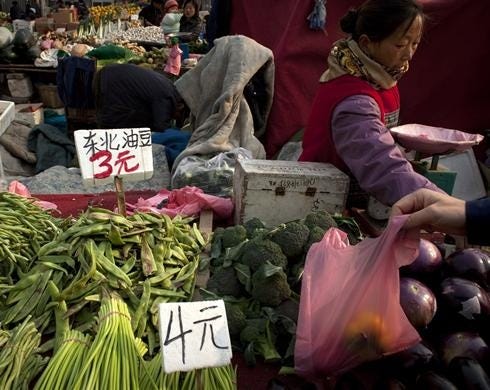
Jié jiǎn means: waste is disrespectful. To the earth. To your ancestors. To the people who have less than you. To the resources that were once scarce.
Chinese culture carries a deep memory of scarcity. Famines. Poverty. Generations who had nothing. And even now, even when we have plenty, we don’t waste.
We save money even when we don’t need to. We use things until they’re truly beyond repair. We take leftovers home from restaurants. We buy things on sale. We think twice before throwing anything away.
This is why so many Chinese immigrants work multiple jobs and live frugally even after they’re financially secure. It’s not because they’re misers. It’s because jié jiǎn is a value, not just a necessity.
吃苦 (Chī Kǔ) — Eating Bitterness
There’s no direct English translation for 吃苦 chī kǔ.
Literally, it means “eating bitterness.” But what it actually means is: enduring hardship without complaint. Working through difficulty with quiet resilience. Suffering in silence because complaining is weakness.
Chī kǔ is why Chinese immigrants work multiple jobs without speaking about exhaustion. It’s why students study through the night without asking for extensions. It’s why pain is often internalised rather than expressed. It’s why “I’m struggling” or “I need help” are some of the hardest things for Chinese people to say.
Because chī kǔ is a virtue. Endurance is strength. Complaint is shameful.
My parents worked six, seven days a week for yeas to give my little brother and I opportunities they never had. They never once complained.
When I burnt out every single year since 2020, but my first instinct wasn’t to rest. It was to push through. Because that’s what you do. You chī kǔ. You endure.
It’s both a strength and a burden. It’s resilience, but it’s also the reason so many of us don’t seek help when we need it. It’s why mental health is so stigmatised. It’s why burnout is worn as a badge of honor rather than recognized as a warning sign.
chī kǔ is complicated. It’s not purely good or purely bad. But it’s deeply Chinese.
Why This Matters
When culture becomes trend, it becomes consumable. And when it becomes consumable, it becomes disposable.
Three years from now, when the “Chinese era” is over and everyone’s moved on to the next aesthetic — will you remember 孝顺? Will you understand 面子? Will you know what 吃苦 cost the generation before you?
Or will Chinese culture just become another thing you tried on and discarded when it stopped being novel?
I need you to understand: being Chinese is not a vibe. It’s a value system. It’s a way of moving through the world. It’s thousands of years of history, sacrifice and survival.
It’s my grandmother reusing everything because waste is disrespectful, even though no one’s watching.
It’s my mother working from 7am to 9pm for six days a week for thirty years without complaint because 吃苦 is what you do.
It’s me covering my family’s mortgage every month because 孝顺 is not negotiable.
It's carrying the weight of 面子, of 节俭, of expectations and obligations and values that are invisible to the outside world but shape everything on the inside.
And if you’re going to claim you’re “in a Chinese time in your life” — if you’re going to borrow the language of my culture — I’m asking you to honor what it actually means.
I’m not saying you can’t appreciate Chinese aesthetics. I’m not saying you can’t wear a tang jacket or drink warm water or love yum cha. I’m saying: if you’re going to claim Chinese culture, engage with the depth. Not just the surface.
Learn the language — not just “ni hao,” but the words that don’t translate. The concepts that shape how we see the world.
Understand the values — not just the ones that are beautiful, but the ones that are complicated.
Honor the weight — not just the aesthetic, but the sacrifice.
Because being Chinese isn’t a trend you try on.
It’s a lifetime you inherit.
Resources for Going Deeper
If you’ve read this far and you genuinely want to understand Chinese culture beyond the aesthetic, here are some places to start:
Books:
The Woman Warrior by Maxine Hong Kingston
Minor Feelings by Cathy Park Hong
What My Bones Know by Stephanie Foo
The Farewell screenplay by Lulu Wang
The Good Daughter by Jasmin Darznik
Films:
The Farewell (孝顺 beautifully depicted)
Everything Everywhere All At Once (immigrant parent relationships)
Better Luck Tomorrow (Asian-American identity)
The Joy Luck Club (generational trauma and love)
Essays & Writing:
Jiayang Fan’s work in The New Yorker
Jenny Zhang’s essays on Chinese-American identity
Ocean Vuong’s On Earth We’re Briefly Gorgeous
Language:
Learn basic Mandarin on Duolingo (it’s free)
Understand that tones change meaning entirely
Learn Chinese proverbs and their cultural context
Ask your Chinese friends to teach you phrases beyond “ni hao”
Deeper Questions to Ask:
What does filial piety look like in practice?
How does collectivism shape decision-making?
What is the cultural memory of scarcity, and how does it show up today?
What does “face” mean beyond reputation?
How do Chinese diaspora communities navigate identity?
This isn’t meant to be homework. It’s meant to be invitation.
If you’re going to claim you’re in a Chinese time in your life, let it be real. Let it be deep. Let it be more than aesthetic.
The End (But Not Really)
Being Chinese isn’t a time in my life.
It’s my entire life.
It’s in every decision I make, every value I carry, every obligation I honor, every sacrifice I accept as baseline.
It’s in the way I can’t separate my success from my family’s wellbeing.
It’s in the weight of 面子, the practice of 节俭, the endurance of 吃苦, the devotion of 孝顺.
It’s beautiful and it’s heavy and it’s complicated and it’s mine.
And I’m not asking you to carry it.
I’m just asking you to understand it before you claim it.
Because my culture is not a trend.
It’s a lifetime.

I’m Chinese Indonesian American so I relate to this so much! Thanks for writing this, and I hope more people read this!
I'm Chinese American and you've beautifully put into words how I've been feeling about this trend. Thank you for the care and emotional labor you put into this piece for our community. 💛